
Repeatability at Volume: Offloading a Part Family
⏱ 17 min read
How to keep a high-volume stamped or molded part family repeatable after offloading to a Saudi contract manufacturer.
How Do You Keep a Part Family Repeatable After Offloading to Contract Manufacturing in Saudi Arabia?
Repeatability after offloading a high-volume stamped or molded part family to contract manufacturing in Saudi Arabia is achieved through a disciplined process control plan, real-time in-process monitoring, robotic automation with verified repeatability, and a data trail that proves consistency month over month. The core principle is simple: you cannot inspect quality into a part; you must build it into the process. When you hand off production to a Saudi contract manufacturer, your role shifts from managing your own floor to governing a process you no longer directly control. That requires a control plan that specifies every critical parameter, monitoring systems that flag drift before defects occur, and a verification rhythm that includes first-off/last-off checks and run-at-rate validation.
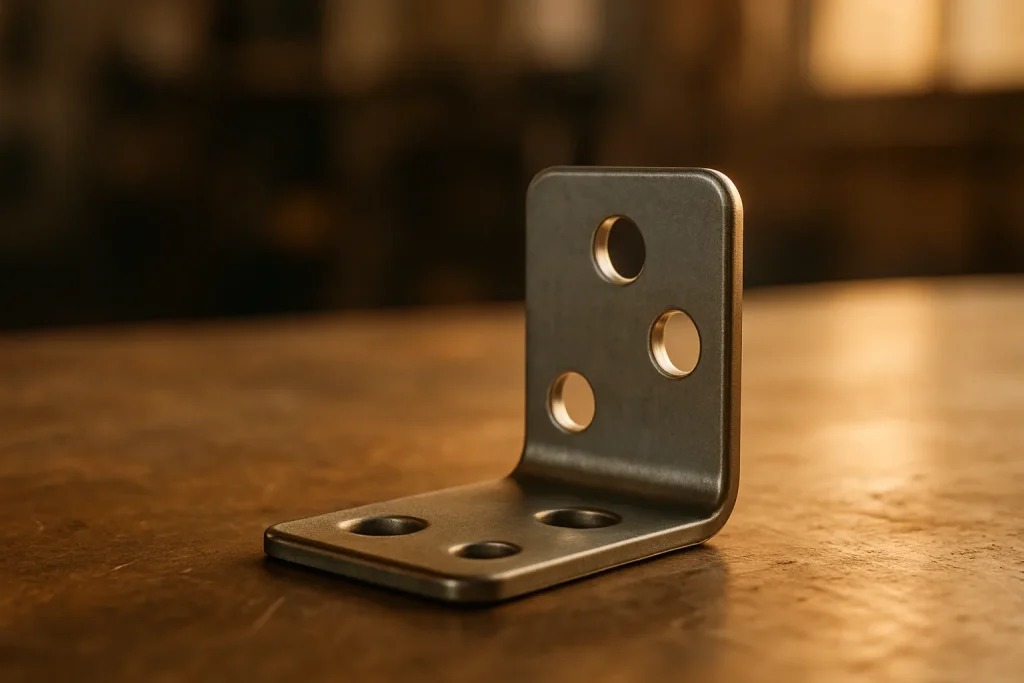
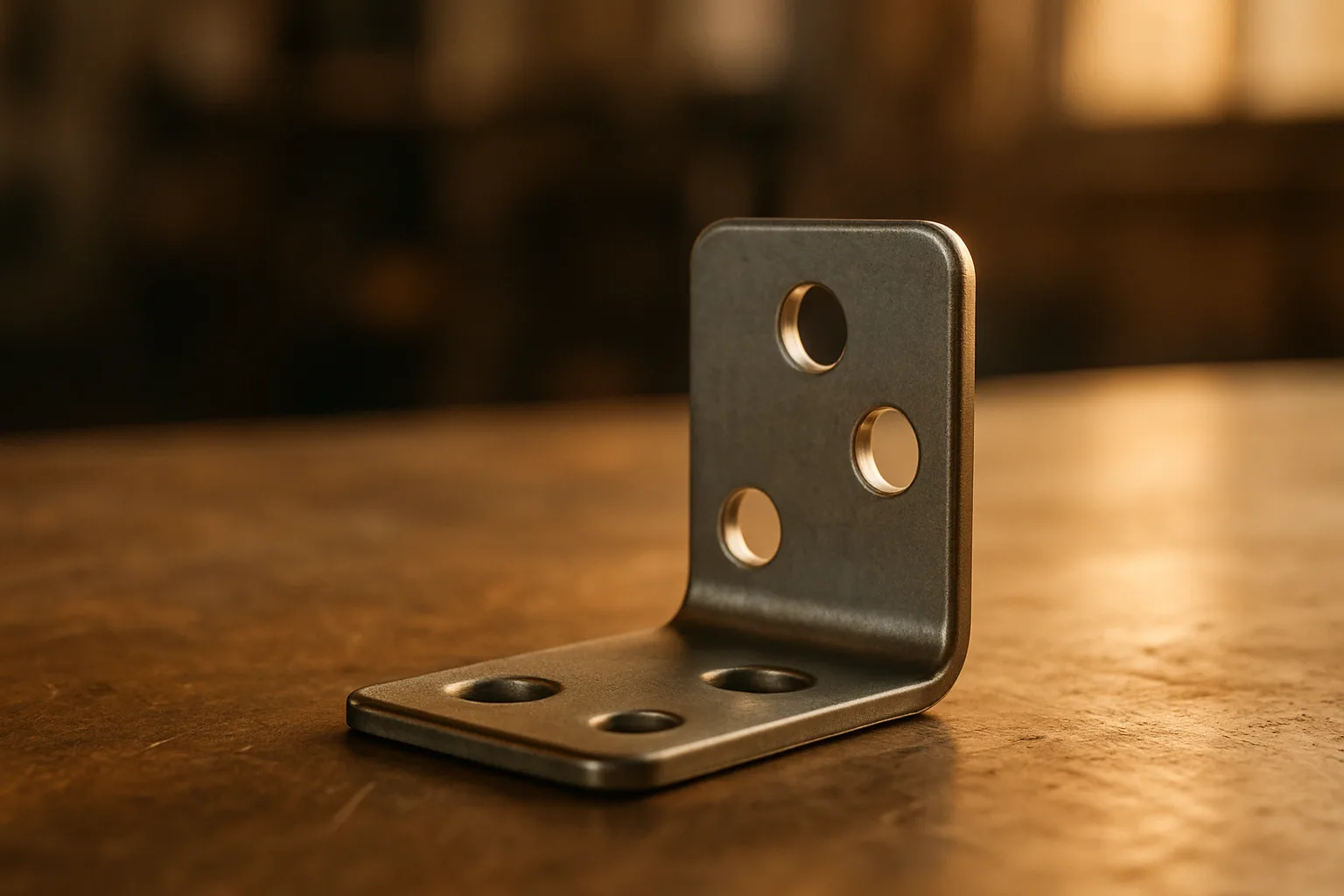
The first step is to define the part family and its critical characteristics. A part family is a group of components that share similar geometry, material, and process steps—for example, a set of stamped brackets with varying lengths but identical hole patterns and bend radii. By grouping parts, you can apply a single control plan across multiple SKUs, reducing complexity and enabling economies of scale. In Saudi Arabia, where OEMs are increasingly localizing under Vision 2030 and IKTVA-style programs, part family localization is a strategic move to reduce import dependence and shorten supply chains. But it also concentrates risk: if one part in the family drifts, the entire family may be affected. Therefore, the control plan must address common failure modes across the family, such as material thickness variation, die wear, or mold temperature fluctuations.
Once the family is defined, you need a process control plan that is more than a document—it is a living agreement between you and your contract manufacturer. It should specify for each process step: the parameter to control (e.g., stamping force, injection pressure, weld current), the target value and tolerance, the monitoring method (e.g., sensor type, frequency), the reaction plan if out of tolerance, and the responsible person. For stamping, critical parameters might include coil feed length, shut height, and lubrication flow. For injection molding, they might include melt temperature, injection speed, holding pressure, and cooling time. For KUKA robotic welding, they might include weld current, voltage, wire feed speed, and travel speed. The control plan should also define how data is recorded and retained—ideally in a digital system that both parties can access.
Finally, repeatability is not a one-time achievement; it is a continuous verification. You need a cadence for reviewing process data, conducting capability studies (Cpk/Ppk), and performing periodic audits. In Saudi Arabia, where summer temperatures can exceed 45°C, environmental factors can affect material properties and machine performance. Your control plan should account for seasonal variations, especially for injection molding where ambient temperature influences cooling rates. By embedding these considerations into the control plan, you create a robust framework that keeps the part family repeatable regardless of external conditions.
What Does a Process Control Plan for Stamped and Molded Parts Include?
A process control plan for stamped and molded parts includes a detailed matrix of process steps, critical parameters, specifications, monitoring methods, sample sizes, frequencies, control methods, and reaction plans. It is the backbone of repeatability because it translates design requirements into actionable shop-floor instructions. For a stamped part family, the plan typically starts with incoming material inspection—verifying steel grade, thickness, and mechanical properties. This is crucial because variations in material can cause springback, cracking, or dimensional drift. The plan then covers the stamping process itself: coil feeding, straightening, lubrication, die closure, and ejection. Each step has parameters that must be monitored. For example, progressive dies require precise feed length and pilot release; a deviation of even 0.1 mm can cause misfeeds and tool damage.
For injection molding, the control plan focuses on the molding machine and tool. Key parameters include barrel temperatures, nozzle temperature, mold temperature, injection pressure and speed, packing pressure and time, and cooling time. The plan should also specify the type and frequency of process monitoring—for instance, cavity pressure sensors that provide real-time feedback on fill quality. In Saudi Arabia, where many OEMs are localizing plastic components for automotive and appliance applications, controlling shrinkage and warpage is critical. The control plan must account for material lot variations, regrind ratios, and moisture content, which can significantly affect part dimensions.
Beyond the primary process, the control plan should cover secondary operations such as deburring, tapping, and assembly. If KUKA robotic welding is used to join stamped components, the plan must include weld parameters, fixture verification, and tip dressing schedules. Robotic welding repeatability depends on consistent part fit-up, so the control plan should specify how incoming stamped parts are checked before welding. Similarly, if the part family includes mixed metal and plastic assemblies, the plan must address press-fit forces, adhesive dispensing, and curing conditions.
The control plan is not static. It should be reviewed whenever there is a change in material, tooling, machine, or personnel. In Saudi Arabia, where contract manufacturers may ramp up production quickly, it is essential to update the plan as processes mature. For instance, after initial tooling validation, you might adjust monitoring frequencies based on observed process stability. The plan should also include a reaction plan for out-of-control conditions: who to notify, how to contain suspect product, and how to correct the process. This ensures that when something drifts, the response is swift and systematic, preventing defects from reaching your assembly line.
How Do You Monitor Stamping Presses and Injection Molding Machines In-Process?
You monitor stamping presses and injection molding machines in-process by installing sensors that capture real-time data on critical parameters and using that data to detect drift before defects occur. For stamping presses, common sensors include load cells on the ram to measure tonnage, proximity sensors to verify feed length, and strain gauges on the frame to detect deflection. These sensors feed into a press-mounted controller or a plant-wide monitoring system. The goal is to establish a signature for a good stroke—a waveform that represents normal operation. When the waveform deviates beyond set limits, the system alerts operators or automatically stops the press. This is particularly valuable for high-volume progressive dies, where a single misfeed can damage the die and cause hours of downtime.
In injection molding, in-process monitoring often revolves around cavity pressure. Cavity pressure sensors installed in the mold provide a direct indication of fill quality, packing efficiency, and part consistency. Unlike machine hydraulic pressure, cavity pressure is unaffected by check ring leakage or hydraulic fluctuations, making it a reliable indicator of part quality. By monitoring peak cavity pressure and the pressure integral, you can detect short shots, flash, and dimensional variations in real time. Many modern injection molding machines also offer screw position and injection velocity profiling, which can be monitored to ensure repeatability. In Saudi Arabia, where contract manufacturers may run a mix of machine brands, it is important to standardize monitoring protocols so that data is comparable across machines.
For KUKA robotic welding and assembly, in-process monitoring includes weld current and voltage monitoring, wire feed speed verification, and robot joint feedback. KUKA robots are known for their repeatability—typically ±0.1 mm or better—but that repeatability is only as good as the fixture and part presentation. Monitoring systems can track weld quality by measuring electrical parameters and comparing them to a reference curve. If the curve shifts, it may indicate electrode wear, poor part fit-up, or material contamination. For assembly, force-displacement monitoring is common: the robot records the force required to press a component into place, and any deviation from the baseline triggers an alert. This is especially useful for mixed metal and plastic assemblies, where press-fit tolerances are tight.
The data from these monitoring systems should be stored and analyzed. A simple approach is to use statistical process control (SPC) charts that plot key parameters over time. Control limits are set based on historical data, and any point outside the limits triggers an investigation. More advanced systems use machine learning to predict when a process will drift, allowing preemptive maintenance. In Saudi Arabia, where skilled labor may be scarce, automated monitoring reduces reliance on operator vigilance and ensures consistent quality across shifts. It also provides the data trail needed to prove repeatability to your own customers and auditors.
What Is First-Off/Last-Off Discipline and Why Does It Matter for Saudi OEM Volume?
First-off/last-off discipline is a quality control practice where the first and last parts produced in a production run are inspected to verify that the process is capable and stable throughout the run. It matters for Saudi OEM volume because it provides a simple, low-cost way to detect process drift over time. The first-off part confirms that the setup is correct before full production begins; the last-off part confirms that the process has not drifted during the run. If both are within specification, you have reasonable confidence that all parts in between are also good—provided the process is in control. This is not a substitute for in-process monitoring, but it is a powerful complement.
In practice, first-off/last-off discipline involves a documented procedure. At the start of a shift or after any setup change, the operator produces a first-off part and submits it to quality for full dimensional inspection. Only after approval does production continue. At the end of the run, a last-off part is inspected similarly. The results are recorded, and any deviation triggers a review of the process data to determine if the entire run is suspect. For stamped parts, first-off inspection might include checking all critical dimensions, hole sizes, and bend angles. For molded parts, it might include checking weight, dimensions, and appearance. For welded assemblies, it might include weld nugget size and penetration.
In Saudi Arabia, where OEMs often run high-volume production with tight delivery schedules, first-off/last-off discipline helps prevent costly recalls and line stoppages. It is particularly important when production runs across multiple shifts or when the contract manufacturer runs the part family on different machines. By requiring first-off/last-off checks at each shift change, you create a chain of evidence that the process was controlled throughout. This is also valuable for traceability: if a defect is found later, you can trace it back to a specific run and take targeted action.
To make first-off/last-off discipline effective, you need clear acceptance criteria and a fast feedback loop. The contract manufacturer should have a dedicated inspection area with calibrated instruments, and quality personnel should be trained to perform the checks consistently. In some cases, you may want to witness the first-off inspection or review the data remotely. As part of your contract manufacturing agreement in Saudi Arabia, specify the frequency of first-off/last-off checks, the inspection items, and the documentation requirements. This ensures that both parties share the same expectations and that the discipline is maintained even when you are not on site.
How Do You Verify Run-at-Rate and Prove Repeatability Month Over Month?
You verify run-at-rate by running the production process at the contracted rate for a sustained period—typically several hours or a full shift—and measuring output, quality, and downtime. This proves that the process can meet your volume requirements without sacrificing quality. Run-at-rate is often conducted after tooling validation and before full production ramp-up. It is a critical step because it exposes bottlenecks, operator fatigue, and equipment limitations that may not appear during short runs. For a stamped part family, run-at-rate might involve running the progressive die at the target strokes per minute for four hours, with periodic quality checks. For injection molding, it might involve running the mold at the target cycle time for eight hours, monitoring cavity pressure and part dimensions. For KUKA robotic welding, it might involve running the weld cell at the target cycle time, checking weld quality and robot repeatability.
To prove repeatability month over month, you need a data trail that goes beyond pass/fail inspection. This includes process parameter data (e.g., tonnage, cavity pressure, weld current), quality data (e.g., Cpk values, defect rates), and maintenance records. The data should be organized so that you can trend key metrics over time. For example, you might track the Cpk of a critical dimension for each production run. If Cpk remains above 1.33 (or your specified target), the process is capable. If it starts to decline, you can investigate before defects occur. Similarly, you can track mean and range charts for process parameters to detect shifts.
In Saudi Arabia, where contract manufacturers may serve multiple OEMs, it is important to establish a reporting cadence. Monthly quality reports should include run-at-rate results, first-off/last-off data, SPC charts, and any corrective actions taken. These reports should be reviewed in regular business reviews with your contract manufacturer. This not only keeps you informed but also drives continuous improvement. If a parameter is consistently near the control limit, you can work together to adjust the process or modify the control plan.
Ultimately, proving repeatability is about building trust through transparency. When you offload a part family, you are entrusting your reputation to your contract manufacturer. By insisting on run-at-rate verification and a robust data trail, you create a partnership where quality is measured, not assumed. This is especially important in Saudi Arabia, where localization initiatives are under scrutiny to deliver world-class quality. A contract manufacturer that embraces this discipline becomes a strategic asset, not just a supplier.
What Role Does KUKA Robotic Welding and Assembly Play in Repeatability?
KUKA robotic welding and assembly play a central role in repeatability because they eliminate human variability in critical joining and assembly operations. A KUKA robot can repeat the same motion thousands of times with sub-millimeter accuracy, provided the fixture and part presentation are consistent. This is essential for high-volume part families where weld quality and assembly tolerances must be held tightly. In Saudi Arabia, where OEMs are localizing complex assemblies, KUKA robots are increasingly used to weld stamped components and assemble mixed metal and plastic parts. The repeatability of the robot itself is a given; the challenge is ensuring that the entire system—fixture, part, and program—is repeatable.
To achieve repeatability with KUKA robotic welding, you must control part fit-up. Stamped parts can vary in springback, hole position, and edge condition. If the parts do not fit together consistently, the robot will weld a gap or misalign the joint. Therefore, the control plan should include incoming inspection of stamped parts for critical fit-up features. Fixtures should be designed with robust locating points and clamps that accommodate minor variations without losing position. In some cases, you may need to add a tack weld or a secondary operation to ensure fit-up before robotic welding. The robot program should also be optimized for the actual part variation, not just the nominal CAD model.
For robotic assembly, repeatability depends on force control and part feeding. KUKA robots can be equipped with force-torque sensors that allow them to adapt to slight misalignments during insertion. This is particularly useful for press-fit operations, where the robot can monitor force-displacement curves and detect anomalies. If a part is out of tolerance, the robot can reject it before damage occurs. For mixed metal and plastic assemblies, the robot can handle different materials with the same precision, provided the gripper and fixtures are designed accordingly. In Saudi Arabia, where ambient temperatures can affect plastic dimensions, the robot program may need to be adjusted seasonally.
The data from KUKA robots can be integrated into your overall process control system. Robot controllers can output weld current, voltage, wire feed speed, and joint positions for each cycle. This data can be used to create a digital record of every weld, enabling traceability and trend analysis. If a weld is out of specification, you can identify it immediately and contain the affected parts. Over time, this data helps you optimize weld parameters and predict maintenance needs. By leveraging KUKA robotic welding and assembly, you not only improve repeatability but also build a foundation for Industry 4.0 in your Saudi manufacturing supply chain.
◈ Key Takeaways
- ✦Define the part family and its critical characteristics to create a focused control plan that addresses common failure modes across all SKUs.
- ✦Implement in-process monitoring on stamping presses (tonnage, feed length) and injection molding machines (cavity pressure) to detect drift before defects occur.
- ✦Enforce first-off/last-off discipline at every shift change to verify setup and detect process drift over the run.
- ✦Conduct run-at-rate verification for a sustained period to prove the process meets volume and quality requirements.
- ✦Maintain a data trail of process parameters and quality metrics to prove repeatability month over month and drive continuous improvement.
Frequently Asked Questions
❓ What is contract manufacturing in Saudi Arabia?
Contract manufacturing in Saudi Arabia is a business arrangement where a company outsources the production of components or finished goods to a specialized manufacturer. This allows businesses to leverage local expertise, reduce capital investment, and focus on their core activities. It is particularly valuable for companies looking to establish or expand their presence in the Saudi market without building their own production facilities.
❓ How much does contract manufacturing cost in Saudi Arabia?
The cost of contract manufacturing in Saudi Arabia varies widely based on factors such as part complexity, material requirements, production volume, and required certifications. While it’s difficult to provide a fixed price without a detailed quote, many businesses find it cost-effective compared to setting up in-house production. Requesting a customized quote from a local contract manufacturer is the best way to get accurate pricing for your specific project.
❓ How long does it take to set up a contract manufacturing partnership in Saudi Arabia?
The timeline for setting up a contract manufacturing partnership in Saudi Arabia depends on the complexity of the parts, the need for tooling or molds, and regulatory approvals. Typically, it can take several weeks to a few months from initial inquiry to full production. Working with an experienced contract manufacturer can streamline the process and ensure a smooth transition.
❓ Which industries in Saudi Arabia use contract manufacturing the most?
Industries such as oil and gas, petrochemicals, construction, automotive, and consumer goods frequently use contract manufacturing in Saudi Arabia. These sectors often require specialized components and scalable production, making contract manufacturing an efficient solution. Additionally, the growing focus on localization under Saudi Vision 2030 has increased demand across various manufacturing sectors.
❓ Can I find a reliable contract manufacturing partner in Saudi Arabia for small to medium volumes?
Yes, many contract manufacturers in Saudi Arabia cater to small and medium volume production, offering flexibility and scalability. They can handle part families and repeatable production runs, ensuring consistent quality. It’s important to evaluate potential partners based on their capabilities, certifications, and experience with your specific industry.
See what ALROUF’s factory can make
Press forming up to 300 tons, KUKA robotic welding cells and injection molding, for 0.8–6 mm mild steel, HSLA, stainless and selected aluminum.
ALROUF Industrial Solutions
Localizing the parts Saudi industry imports — Saudi Arabia