
How to Localize Imported Metal Components in Saudi Arabia
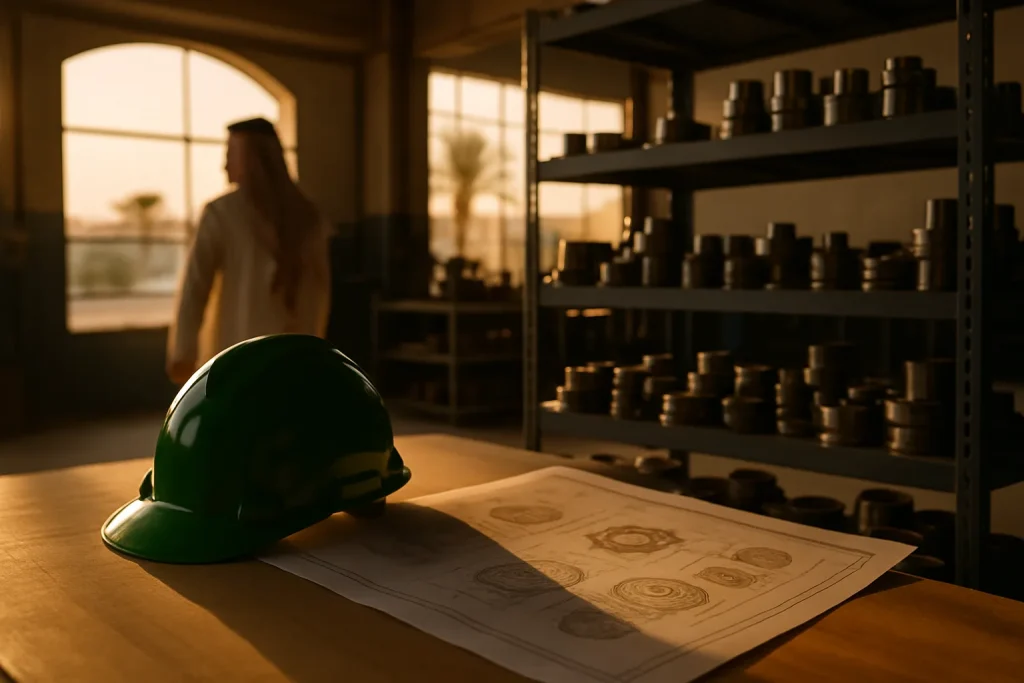
To localize an imported metal component in Saudi Arabia, begin with one clearly defined part family and assess its drawings, materials, expected quantities, quality requirements and tooling needs. The selected component should then pass through manufacturing feasibility, quotation, sample production, inspection and customer approval before moving into repeat local production.
Successful component localization is not simply a matter of replacing a foreign supplier with a Saudi manufacturer. The component must fit the local manufacturer’s processes, meet the required quality standards and make commercial sense at the expected production volumes.
This guide explains how Saudi manufacturers, OEMs and procurement teams can evaluate imported metal components for potential local production while protecting quality and supply continuity.
What Is Component Localization in Saudi Arabia?
Component localization is the process of assessing whether a component currently sourced from outside Saudi Arabia can be manufactured within the Kingdom according to the required drawings, materials, quantities and quality expectations.
Localization can support companies that want to:
- Reduce dependence on imported components
- Develop an additional manufacturing source
- Shorten some supply-chain routes
- Improve communication with production partners
- Support local-content objectives
- Outsource a repeat metal manufacturing process
- Build a more resilient component supply strategy
These benefits are potential outcomes, not automatic results. Each component must be evaluated technically and commercially before a localization decision is made.
Saudi Arabia’s industrial development direction provides an important strategic context for local manufacturing. The National Industrial Development and Logistics Program supports the Kingdom’s wider ambitions to develop industrial capabilities and strengthen supply chains.
However, alignment with Vision 2030 does not replace the need for component-level feasibility, approved quality requirements and realistic production economics.
Which Imported Components Should Be Localized First?
A company should not begin by attempting to localize an entire product line. A more controlled approach is to select one component or related part family for the first review.
A suitable starting component usually has:
- A clear and current engineering drawing
- A defined material and grade
- Stable or reasonably predictable demand
- Repeat production requirements
- Measurable quality and inspection criteria
- Limited design changes
- A manufacturing process available for evaluation
- A customer team ready to review and approve samples
For ALROUF Industrial, potential candidates may include suitable repeat metal components such as brackets, fixing plates, joining parts, covers, supports and other stamped or press-formed parts. Every example remains subject to technical review.
The highest-volume component is not automatically the best candidate. A part with complex tolerances, safety-critical functions or unavailable processes may carry more risk than a moderately sized part family with stable specifications and clear demand.
Selection should be based on manufacturing fit and commercial viability—not volume alone.
What Information Is Needed for a Localization Review?
The quality of the localization decision depends on the quality of the information provided.
The initial component manufacturing review should preferably include:
- Part name and description
- Engineering drawing and revision number
- Material and material grade
- Thickness and main dimensions
- Critical dimensions and tolerances
- Surface finish or coating
- Intended component function
- Approximate annual demand
- Expected batch quantities
- Quality and inspection requirements
- Required delivery location
- Target production timing
- Existing tooling information, if applicable
A physical sample can support the review, but it should not replace a controlled drawing and specification when these documents are required for production.
If the drawing contains confidential information, the customer should confirm the available confidentiality process before sharing it. Uploading a drawing should not be treated as automatic manufacturing acceptance or as a completed confidentiality agreement.
How Is Manufacturing Feasibility Assessed?
A localization feasibility assessment determines whether a component is potentially suitable for the manufacturer’s available processes and production conditions.
The review should examine:
Manufacturing process
The manufacturer must determine whether the part geometry, material and expected quantities are suitable for its processes.
Material
The required material and grade must be identified. Any proposed alternative should be reviewed and approved before use.
Dimensions and tolerances
Tight or critical tolerances may affect tooling, inspection methods, production speed and cost.
Component function
A decorative bracket and a safety-critical component require very different levels of validation. The function and potential consequences of failure must be understood.
Tooling
The review should determine whether existing tooling can be used or modified or whether new tooling, dies, fixtures or gauges may be required.
Quality requirements
Inspection criteria, material documentation, sampling expectations and acceptance requirements should be agreed before production.
Production economics
Material utilization, setup, tooling, batch quantities, expected demand, finishing, inspection and packaging all affect commercial suitability.
Available capacity
Production capacity must be reviewed against tooling, cycle time, maintenance, inspection resources and the factory’s existing commitments. A machine’s nominal capacity alone does not confirm availability or delivery time.
A suitable result at this stage means the opportunity can move to a more detailed technical and commercial review. It does not yet mean that the manufacturer has accepted the part for repeat production.
Does Localization Require New Tooling?
Some components can use transferred or modified tooling, while others require new tools, dies, fixtures or inspection gauges. The appropriate route depends on the component and the compatibility of any existing tooling with the proposed local production process.
Before transferring an existing tool, the parties should evaluate:
- Tool ownership
- Current condition
- Maintenance history
- Compatibility with local equipment
- Required refurbishment
- Transportation and installation
- Availability of technical documentation
- Approval for modification
- Responsibility for future maintenance
When new tooling is needed, the quotation should distinguish between tooling costs and recurring unit costs.
Tooling lead time should not be estimated from a general template. It depends on part geometry, material, tool complexity, required trials, inspection needs and the approved toolmaking route.
Ownership, permitted use, maintenance responsibility and end-of-program arrangements should be documented before production begins.
How Are Samples and Quality Requirements Approved?
Localization should move through agreed quality gates before repeat production begins.
A sample or pilot stage may evaluate:
- Material conformity
- Dimensions and critical tolerances
- Surface condition and finish
- Component function
- Tool and process performance
- Inspection method
- Packaging and handling
- Production consistency
The sample quantity and approval process should reflect the component’s requirements. There is no universal pilot quantity or quality metric suitable for every part.
Before producing a sample, the customer and manufacturer should agree on:
- The approved drawing revision
- Critical characteristics
- Inspection responsibilities
- Acceptance criteria
- Required records
- Treatment of non-conforming samples
- Conditions for revalidation
Repeat production should begin only after documented approval, an agreed purchase order and a defined supply schedule.
How Can Supply Disruption Be Reduced During Localization?
Imported supply should not be stopped simply because the first local sample has been produced.
A controlled transition may include:
- Completing the technical feasibility review
- Agreeing on the commercial and tooling route
- Producing and inspecting samples
- Approving a limited production batch
- Validating packaging and delivery
- Monitoring quality and supply performance
- Increasing local production according to agreed results
The customer may retain an existing supply route or appropriate stock while local production is being validated. The exact transition strategy depends on demand, lead time, inventory risk and the criticality of the component.
Production should increase based on evidence rather than fixed percentages. A schedule that works for one component may not be suitable for another.
What Is the Difference Between Localization and Second-Source Manufacturing?
Localization moves production of a component into Saudi Arabia. Second-source manufacturing adds another qualified supplier while the original source may remain active.
A company may use both strategies together by qualifying a Saudi manufacturer as an additional source for an imported component. This can create more supply options without requiring an immediate full transfer.
The local manufacturer must still demonstrate that the component can be produced according to the approved drawing, material and quality requirements.
The decision to retain, reduce or replace the original supply source belongs to the customer and should reflect operational and commercial risk.
How Should Companies Select a Saudi Manufacturing Partner?
A prospective partner should be assessed according to the component—not only general marketing statements.
The review should consider:
- Relevant manufacturing processes
- Technical review approach
- Tooling route
- Quality and inspection controls
- Drawing and revision management
- Material traceability requirements
- Available production capacity
- Sample approval process
- Data and drawing confidentiality
- Communication and opportunity ownership
- Ability to support repeat orders
Companies should request evidence for any claimed equipment, certification, tolerance, material range or production capacity. A capability listed on a website should not replace a component-specific technical review.
From Imported Part to Repeat Local Production
A structured component localization journey can follow these stages:
Component Selection → Feasibility Review → Technical Clarification → Quotation → Tooling → Sample or Pilot → Approval → Repeat Order
Each stage should have:
- A responsible owner
- Complete input information
- A documented decision
- A clear next action
- An approved drawing revision
If information is missing, the opportunity should remain under review. If the process, quality requirements or economics are unsuitable, the component should not be forced into local production simply to meet a localization target.
A successful program begins with a component that is technically appropriate, commercially viable and supported by clear customer requirements.
Submit an Imported Component for Localization Review
Do you have a repeat metal component that you currently import or want to qualify with a Saudi manufacturing partner?
Share the part description, drawing, approximate annual demand, delivery location and quality requirements with ALROUF Industrial. The initial review will help identify whether the component may fit a suitable manufacturing route and what information is needed for the next technical step.
Submitting a component begins a technical and commercial review. It does not represent automatic manufacturing acceptance, pricing or a delivery commitment.
Submit a Component for Localization Review →
Frequently Asked Questions
What is component localization in Saudi Arabia?
Component localization is the process of evaluating and transferring production of an imported component to a suitable manufacturer within Saudi Arabia. The process includes technical feasibility, tooling, sampling, inspection, customer approval and repeat-production planning.
Which imported components should a company localize first?
The first candidate should have clear drawings, defined materials, measurable quality requirements, reasonably stable demand and a manufacturing process available for evaluation. High volume alone does not make a part suitable.
What information is required for a localization feasibility review?
The manufacturer will generally require a drawing or detailed part description, material, dimensions, tolerances, finish, estimated annual demand, batch quantity, component function and quality requirements.
How much does it cost to localize a metal component?
Cost depends on the material, geometry, tolerances, tooling, expected quantities, finishing, inspection and packaging. A reliable estimate requires a component-specific technical and commercial review.
How long does component localization take?
The timeline depends on drawing readiness, material availability, tooling, sample production, inspection, corrective actions and customer approval. A reliable schedule can only be proposed after reviewing the complete requirements.
Does localization always reduce costs?
No. Localization may reduce certain import, logistics or inventory pressures, but tooling, materials, production quantities and quality requirements affect the total cost. The decision should be based on a complete commercial assessment.
Does ALROUF Industrial manufacture every type of metal component?
No. ALROUF Industrial reviews each component against the factory’s verified processes, tooling, quality requirements and available capacity. Only suitable opportunities proceed to quotation and sampling.
How can I submit a component to ALROUF Industrial?
Begin by sharing the component description, approximate annual demand, delivery location and quality requirements. A drawing may be shared during the initial review or after confirming the appropriate confidentiality process.