
Incoming Inspection for Localized Parts
⏱ 15 min read
A receiving-side protocol for Saudi OEMs: verify first production shipments from local stamping and molding partners against approved drawings.
What Is Incoming Inspection for Localized Components?
Incoming inspection for localized components is the receiving-side quality gate that verifies the first production shipments from an in-Kingdom stamping or injection molding partner against the approved drawing, material specification, and first-article inspection (FAI) report before those parts enter your assembly line. It answers a single question: does this shipment conform to the part you approved, at the volume you need, from the contract manufacturing Saudi Arabia partner you selected? The answer must be documented, repeatable, and tied to the drawing revision that governs the part. Without it, localization becomes a transfer of risk rather than a reduction of it.
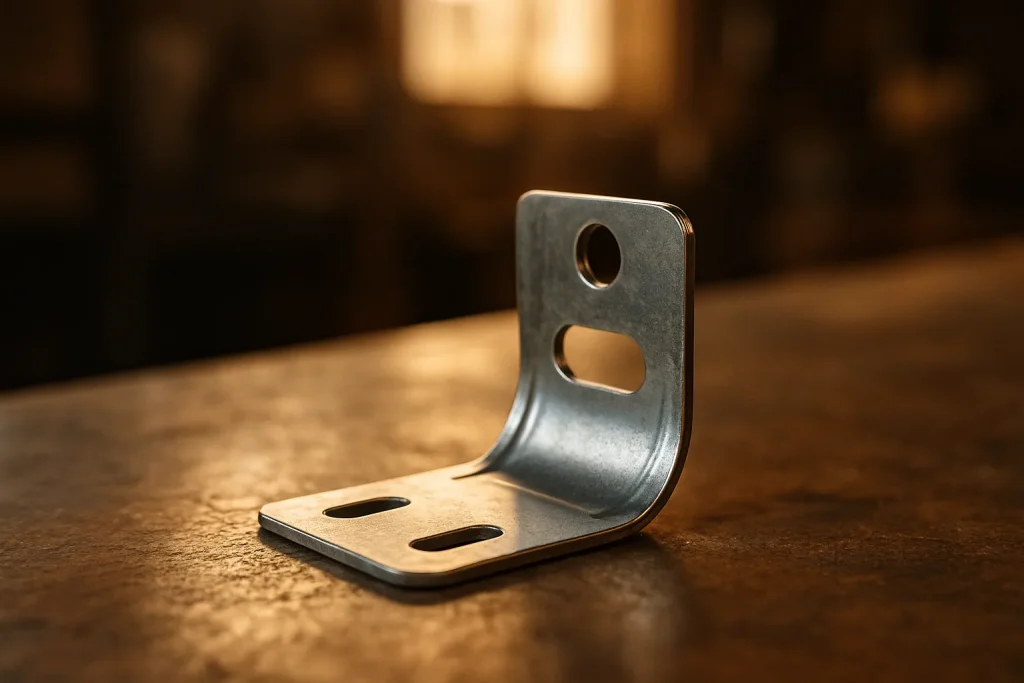
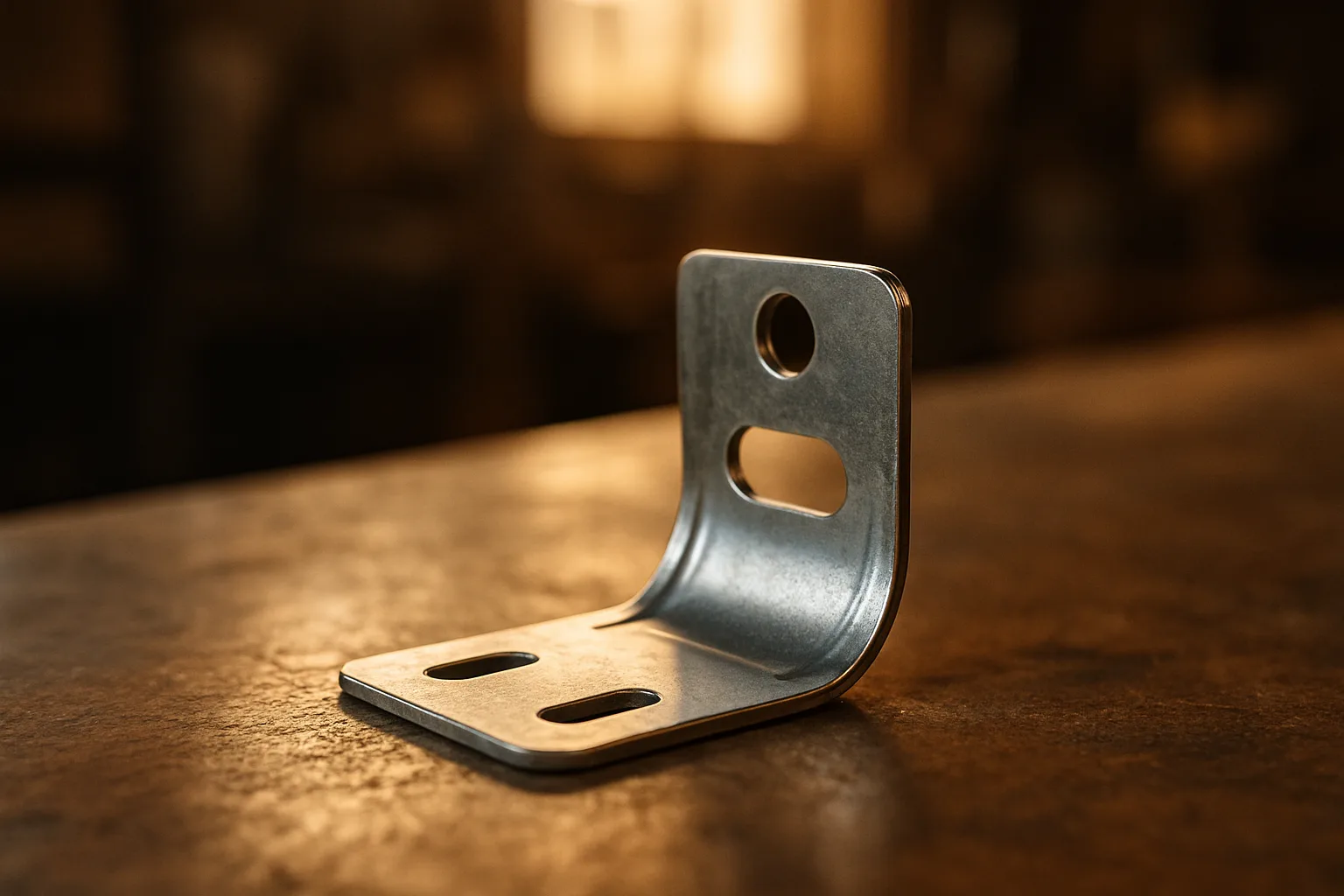
The scope of incoming inspection is deliberately narrow. It is not a re-qualification of the supplier, nor a repeat of the pre-production inspection that happened before the run started. It is the routine, shipment-level verification that the production process is still producing what was approved. For a stamped bracket, that means checking critical dimensions, material grade, coating thickness, and burr condition. For a molded housing, it means checking wall thickness, gate vestige, warp, and color against the master. The inspection plan should be written before the first shipment arrives, not after a nonconformance is found.
In the Saudi context, incoming inspection carries additional weight because localized parts often replace imported ones that arrived with a mature, well-documented quality history. When you localize, you are rebuilding that history from zero. The receiving protocol is how you rebuild it deliberately. It should reference the same drawing, the same datum scheme, and the same acceptance criteria used during first-article approval, so that every shipment is measured against a single, unambiguous standard. This discipline is central to any serious quality assurance for localized components in Saudi Arabia.
A well-structured incoming inspection plan also protects the localization business case. If localized parts are quarantined, sorted, or reworked at receiving, the landed cost advantage erodes quickly. The inspection plan exists to catch drift early, when it is a process adjustment at the supplier, not a line-down event at your plant. That is the difference between a localization program that scales and one that stalls at the first production order.
How Do You Structure a Receiving Protocol for Stamped and Molded Parts?
A receiving protocol for stamped and molded parts is structured around three layers: a shipment-level check, a periodic dimensional audit, and a triggered full-layout inspection. The shipment-level check is fast and visual: verify part number, revision level, quantity, packaging integrity, and the presence of a certificate of conformance (CoC) or inspection report. It takes minutes and catches administrative and handling errors before they reach the line. The periodic dimensional audit samples a defined number of parts per lot and measures a short list of critical-to-function characteristics. The triggered full-layout inspection is reserved for new tooling, process changes, or a nonconformance that requires root-cause investigation.
For stamped parts, the receiving protocol should specify which characteristics are checked at receiving versus which are verified at the press. Flatness, burr height, and critical hole positions are common receiving checks because they are sensitive to die wear and coil variation. Material grade and thickness should be verified against the mill certificate, not assumed from the supplier’s label. If the part is coated or plated, coating weight or thickness is a receiving characteristic because it can vary independently of the stamping process.
For molded parts, the receiving protocol should focus on characteristics that drift with process conditions: wall thickness, overall dimensions in the flow direction, gate vestige, sink marks, and color. Molded parts also require a check for regrind content if the approved specification limits it, and a visual standard for cosmetic defects that is agreed in writing. The protocol should state the sample size, the measurement method, the gauge or fixture used, and the acceptance criteria for each characteristic. Ambiguity at this stage becomes a dispute at the next shipment.
The protocol should also define the disposition path for nonconforming material. A clear path—quarantine, notify supplier, request containment and root cause, and decide on use-as-is, rework, or return—prevents ad hoc decisions on the receiving dock. For Saudi OEMs, the disposition path should account for the supplier’s location and the lead time to replace a rejected lot. If the supplier is in-Kingdom, replacement is faster, but the protocol should still specify how quickly a containment response is expected. The receiving protocol is a contract in practice, even when it is not in the contract.
What Must a First-Article Inspection Report Contain?
A first-article inspection (FAI) report must contain the complete dimensional and material evidence that the first production parts conform to the approved drawing. At minimum, it includes a ballooned drawing with every dimension, tolerance, and note numbered; a measurement result for each ballooned characteristic; the measurement method and gauge used; the material specification and mill certificate; and a statement of conformity signed by the supplier’s quality authority. For localized parts in Saudi Arabia, the FAI report is the bridge between the pre-production approval and routine shipments. It is the baseline against which every subsequent shipment is compared.
The FAI report should also document the process conditions under which the first articles were produced. For stamping, that means the press, the die number, the coil lot, and the lubrication used. For injection molding, it means the machine, the mold, the resin lot, the drying conditions, and the process window. These details matter because they define what “normal” looks like. If a later shipment is produced on a different machine or with a different resin lot, the FAI baseline tells you whether that change is significant enough to require re-approval.
A common gap in FAI reports from new localized suppliers is the absence of a clear datum scheme. The report may show dimensions that match the drawing numerically but were measured from a different datum, which makes the results non-comparable to the drawing’s intent. The receiving team should verify that the FAI report uses the same datum reference frame as the drawing. If it does not, the report should be returned for correction before the first shipment is accepted. This is a technical point, but it is the difference between a report that proves conformance and one that merely looks complete.
The FAI report should be reviewed and approved by the OEM’s engineering and quality functions, not only by procurement. Procurement owns the commercial relationship; engineering owns the drawing; quality owns the acceptance criteria. A joint sign-off ensures that the report is technically valid and that the receiving inspection plan is aligned with it. Once approved, the FAI report becomes a controlled document. Any change to the drawing, the material, or the process requires a new or updated FAI, and the receiving protocol should state that trigger explicitly.
How Do You Verify Dimensional and Material Conformance at Receiving?
Dimensional conformance at receiving is verified by measuring a defined sample of parts against the critical characteristics listed in the inspection plan, using the same gauges and fixtures referenced in the FAI report. The measurement system itself should be validated—ideally through a gauge repeatability and reproducibility (GR&R) study—so that the receiving team knows the measurement variation is small relative to the tolerance. For stamped parts, this often means checking hole positions with pin gauges or a checking fixture; for molded parts, it may mean checking key dimensions with calipers or a coordinate measuring machine (CMM) for the first article and a fixture for routine lots.
Material conformance is verified by reviewing the mill certificate or resin certificate against the approved specification. For steel, the certificate should state the grade, the heat number, the mechanical properties, and the chemical composition. For aluminum, it should state the alloy and temper. For resin, it should state the grade, the manufacturer, and the lot number. The receiving team should not accept a generic statement of conformity in place of the certificate. If the supplier cannot provide traceability to the mill or resin lot, the material verification is incomplete, and the shipment should be held pending resolution.
For coated or plated parts, material verification extends to the coating. The specification should state the coating type, the thickness or weight, and the acceptance test. Common receiving checks include coating thickness measurement and a visual inspection for adhesion, blistering, or discoloration. In Saudi Arabia’s climate, where humidity and temperature vary significantly by region, coating integrity is not a cosmetic concern; it is a corrosion-protection requirement. The receiving protocol should treat it as such.
Material verification also includes checking that the supplier has not substituted a material without approval. Substitution is a common source of field failures in localized programs because the substitute may meet the drawing’s nominal properties but fail in fatigue, corrosion, or temperature resistance. The receiving protocol should require the supplier to notify the OEM of any material change and to submit a new FAI before shipping parts made from the substitute. This is a simple rule that prevents a complex problem.
What Triggers a Full Re-Inspection or Re-Approval?
A full re-inspection or re-approval is triggered by any change that could affect form, fit, function, or reliability. The most common triggers are a change in material or material source, a change in tooling or tooling repair that affects the cavity or die geometry, a change in machine or process parameters outside the approved window, a change in the manufacturing location, and a nonconformance that indicates the process is not capable. For Saudi OEMs localizing parts, the trigger list should be written into the supplier agreement so that both parties understand when a new FAI is required.
A change in material source is a frequent trigger in localized programs because suppliers may switch mills or resin suppliers to manage cost or lead time. Even if the grade is nominally the same, the forming or molding behavior can differ, and the resulting part may not match the approved baseline. The receiving protocol should require the supplier to notify the OEM before shipping parts made from a new material lot or source, and to provide a new FAI if the change is significant. The OEM’s quality function should define what “significant” means for each part family.
Tooling changes are another common trigger. A die repair that welds and re-machines a forming surface can change the part’s dimensions or surface finish. A mold repair that replaces a cavity insert can change the part’s shrink behavior. The supplier should document tooling maintenance and notify the OEM when a repair affects the part. The receiving protocol should include a periodic tooling audit—reviewing the supplier’s maintenance records and verifying that the tooling is still producing parts within the approved baseline. This is especially important for high-volume stamped parts, where die wear is continuous.
A nonconformance that recurs across shipments is a trigger for re-approval, not just for containment. If the same characteristic is out of specification on two or more consecutive lots, the process is not stable, and the FAI baseline is no longer valid. The OEM should require the supplier to perform a root-cause investigation, implement corrective action, and submit a new FAI that demonstrates the process is capable. The receiving protocol should define the threshold for this trigger—for example, two consecutive lots with the same nonconformance—so that the decision is not made ad hoc.
How Do You Keep a Localized Part Family Release-Ready at OEM Volume?
Keeping a localized part family release-ready at OEM volume requires a receiving protocol that is standardized across the family, not customized for each part. The family should share a common inspection plan template, a common sampling scheme, and a common disposition path. This standardization reduces training burden, speeds up receiving, and makes it easier to compare performance across parts. For Saudi OEMs localizing multiple similar parts—brackets, housings, clips, or enclosures—the family approach is the difference between a manageable quality system and a fragmented one.
The protocol should also include a feedback loop to the supplier. Receiving data should be summarized and shared with the supplier on a regular cadence, not only when a nonconformance occurs. The summary should show the measured values against the specification limits, the trend over time, and any near-miss conditions. This gives the supplier the information needed to adjust the process before a nonconformance occurs. It also builds the evidence base for reducing inspection frequency once the process demonstrates sustained capability.
Reducing inspection frequency is a legitimate goal, but it must be earned. The receiving protocol should define the criteria for moving from tightened inspection to normal inspection, and from normal to reduced. Typical criteria include a defined number of consecutive conforming lots, a process capability index (Cpk) above a threshold for critical characteristics, and no unresolved nonconformances. The move should be documented and reversible. If a nonconformance occurs, the protocol should specify the return to tightened inspection.
Finally, the protocol should be reviewed periodically—at least annually—to confirm that it still reflects the drawing, the process, and the volume. Localized part families evolve: volumes increase, tooling ages, and suppliers change. A protocol that was adequate at launch may be insufficient at scale. The review should involve engineering, quality, and procurement, and it should result in a documented update. This is how a localized part family stays release-ready not just for the first shipment, but for the thousandth.
◈ Key Takeaways
- ✦Write the incoming inspection plan before the first shipment arrives, and align it with the approved FAI report and drawing revision.
- ✦Verify material conformance through mill or resin certificates, not generic statements of conformity, and treat coating integrity as a corrosion requirement in Saudi Arabia.
- ✦Define clear triggers for full re-inspection—material change, tooling repair, process drift, or recurring nonconformance—and write them into the supplier agreement.
- ✦Standardize the receiving protocol across the part family to reduce training burden and enable meaningful performance comparison.
- ✦Use receiving data as a feedback loop to the supplier, and only reduce inspection frequency when sustained process capability is demonstrated.
Frequently Asked Questions
❓ What is contract manufacturing in Saudi Arabia?
Contract manufacturing in Saudi Arabia refers to outsourcing production to a local facility that manufactures components or finished goods on behalf of another company. This approach helps businesses meet local content requirements and benefit from Saudi Vision 2030 incentives. It also reduces lead times and logistics costs compared to importing.
❓ How long does it take to set up contract manufacturing in Saudi Arabia?
The timeline for setting up contract manufacturing in Saudi Arabia varies depending on the complexity of the product and regulatory approvals. Typically, it can take several weeks to a few months to finalize agreements, establish quality control processes, and begin production. Working with an experienced partner can streamline the process.
❓ Why should I choose contract manufacturing in Saudi Arabia?
Choosing contract manufacturing in Saudi Arabia offers advantages such as compliance with local content regulations, access to government incentives, and reduced shipping times. It also supports the growth of the domestic industrial sector, aligning with Saudi Vision 2030. Additionally, it can lower overall costs by avoiding import duties and logistics challenges.
❓ How much does contract manufacturing cost in Saudi Arabia?
The cost of contract manufacturing in Saudi Arabia depends on factors like material costs, production volume, and labor. It’s best to request a detailed quote from a local manufacturer to get an accurate estimate. Keep in mind that while upfront costs may vary, local production can save on import fees and transportation.
❓ Can I get incoming inspection services for localized parts in Saudi Arabia?
Yes, many contract manufacturers in Saudi Arabia offer incoming inspection services to ensure localized parts meet quality standards. This is crucial for maintaining product integrity and compliance with Saudi regulations. It’s advisable to partner with a manufacturer that has robust quality control processes in place.
Qualifying a Saudi manufacturing partner?
Download ALROUF’s capability statement: processes, press capacity, materials, quality gates and accepted part families.
ALROUF Industrial Solutions
Localizing the parts Saudi industry imports — Saudi Arabia