
How Saudi OEMs Can Qualify a Local Second Source for Metal Components
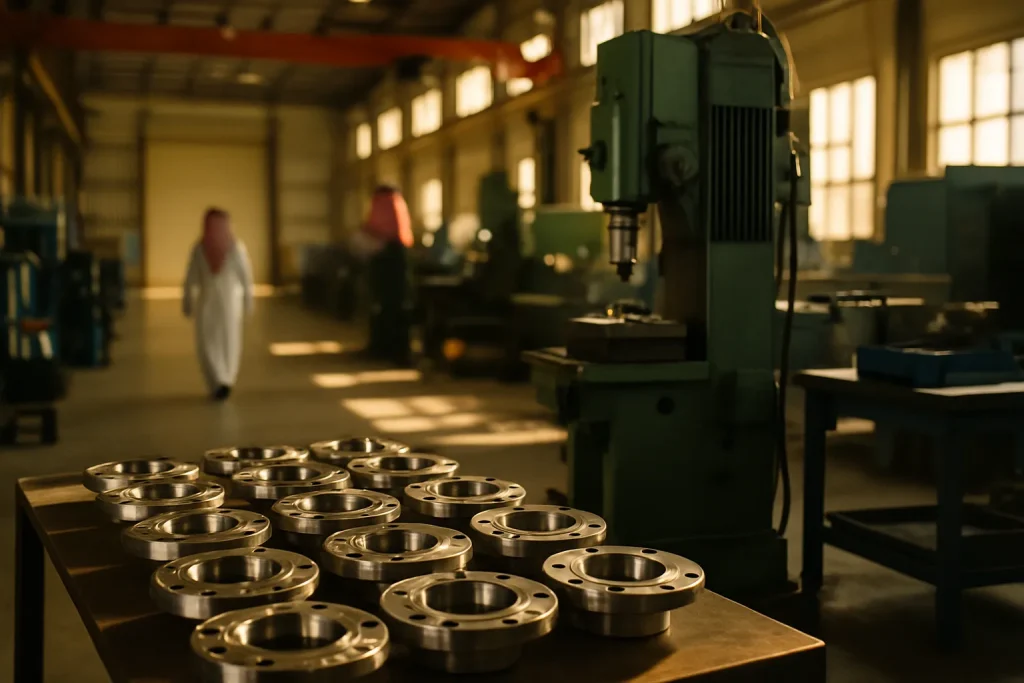
A Saudi OEM can qualify a local second source by selecting a recurring metal component, sharing its drawing and quality requirements, and assessing a potential manufacturer’s process, tooling, samples, and delivery plan. The existing supplier can continue supplying the part while the OEM reviews the new source. Production volumes should change only after the OEM approves the part and agrees on clear quality and supply criteria.
What Is a Dual-Source Component Strategy?
A dual-source strategy uses two approved suppliers for the same component or part family. For an OEM that currently imports a metal part, the second source may be a manufacturer in Saudi Arabia. Keeping the existing supplier active during qualification helps the OEM evaluate local production without making an immediate change to its supply plan.
The purpose is to create a credible alternative for a specific part. A local manufacturer still needs to demonstrate that it can produce the required material, dimensions, finish, and quantities consistently. Its ability to meet the OEM’s delivery requirements must also be reviewed.
For companies exploring industrial localization in Saudi Arabia, dual sourcing offers a way to assess one component at a time. The first decision is whether the part is suitable for a local manufacturing route.
Which Metal Components Should You Assess First?
Start with a part that has a clear specification and recurring demand. Metal brackets, mounting plates, covers, and similar components may be worth assessing, depending on their design and function. An example part family is an invitation to review feasibility, not proof that every part in that family can be manufactured.
For each candidate, collect:
- The current drawing and revision number
- The material grade, thickness, and required finish
- Approximate annual demand and expected batch quantities
- Critical dimensions and tolerances
- The part’s function and any safety requirements
- Existing tooling and who owns it
- Current supply issues, if any
A part with a complete drawing and predictable demand is easier to evaluate than one defined only by a photograph or a broad description. A sample can help explain the part, but it may not reveal the original material specification or acceptance criteria.
Do not choose a component solely because it is imported or expensive. The proposed process, tooling investment, quality requirements, and expected volume must make sense together.
How Do You Qualify a Local Second Source?
1. Review manufacturing fit
Share the part information with the potential manufacturer for an initial technical review. The review should examine the geometry, material, expected demand, required quality level, and possible production route.
The outcome may be potentially suitable, more information needed, or not suitable for the available processes. An initial review is not a production approval or a final quotation.
If the drawing is confidential, agree on the appropriate confidentiality process before sharing it. Identify who owns the drawing, sample, and any existing tooling.
2. Agree on tooling and sample requirements
If the part appears suitable, the OEM and manufacturer can assess whether existing tooling may be used or new tooling is needed. They should establish tooling ownership, costs, maintenance responsibilities, and the criteria for accepting sample parts.
Tooling costs and setup assumptions should be clear before they are combined with a proposed unit price. The time and work required depend on the component and the manufacturing route.
3. Inspect and approve samples
Engineering and quality teams should agree on what the first samples must demonstrate. Their review may cover dimensions, material records, finish, fit in the final assembly, and any functional tests required for that particular part.
The inspection plan should follow the drawing and the OEM’s requirements. Sample sizes, measurement methods, and process capability targets should be agreed for the component; one fixed rule will not fit every program. If the two suppliers use different inspection methods, the OEM should confirm that results can be compared reliably.
Record deviations and obtain approval before treating a sample as acceptable for production.
4. Test the production and delivery process
A successful sample is only one part of qualification. The OEM also needs to assess whether the manufacturer can repeat the approved result under the expected production conditions.
An agreed pilot may help test inspection, packaging, labeling, traceability, and delivery alongside the part itself. The OEM and manufacturer should document the acceptance criteria and next steps before the pilot begins. The existing supplier can continue supporting demand while this work takes place.
When Should You Transfer Volume?
Transfer volume according to the OEM’s approved qualification plan, the importance of the part, and the demonstrated capacity of both suppliers. There is no universal starting percentage or number of production lots that suits every component.
Before increasing an allocation to the new source, confirm:
- Sample and pilot acceptance
- Agreed inspection and nonconformance procedures
- Available production capacity and tooling readiness
- Packaging and delivery performance
- Commercial terms for the planned quantities
Some OEMs may keep two approved suppliers for the long term. Others may eventually change the allocation. Either decision should reflect supply risk, total cost, and the performance of the specific component program.
Local production may reduce exposure to some international shipping risks, but the result depends on where raw materials, tooling, and supporting processes come from. Compare the complete supply route before making lead-time or cost assumptions.
What Can Delay Second-Source Qualification?
An incomplete specification. An outdated drawing or unclear material grade can cause the new supplier to make a part that looks right but does not meet the requirement. Confirm the approved drawing revision before technical review.
Unclear tooling ownership. Establish whether a tool exists, whether it can be transferred, and who is responsible for any new tool before planning a production schedule.
Treating sample approval as full production approval. A sample demonstrates that a part can be made for inspection. A pilot and agreed production controls help assess whether it can be supplied repeatedly.
Changing volume before capacity is confirmed. The manufacturer must review the proposed demand alongside its other production commitments, setup needs, maintenance, and inspection work.
Comparing only unit prices. Include tooling, packaging, inventory, transport, quality costs, and the commercial effect of any supply interruption when evaluating the two sources.
How ALROUF Industrial Can Begin the Review
ALROUF Industrial’s starting point is the customer’s recurring metal component. Share a drawing or part description, material, approximate annual demand, and quality requirements so the team can assess whether the part fits a suitable manufacturing route.
The review can identify information still needed, possible tooling considerations, and the next technical step. Submitting a part does not guarantee manufacturing acceptance, pricing, or a delivery date.
Submit a Part for Manufacturing Review →
Frequently Asked Questions
Can we keep importing a component while evaluating a Saudi manufacturer?
Yes. The existing supplier can continue supplying the component while the OEM reviews the proposed local source, inspects samples, and decides whether to approve a pilot. The allocation between suppliers is a purchasing and production decision for the OEM.
What information is needed for an initial manufacturing review?
A part drawing or description, material, approximate annual demand, and quality requirements provide a useful starting point. Dimensions, finish, batch quantities, sample availability, and tooling information can help with the next stage of review.
Does qualifying a second source mean moving all production to Saudi Arabia?
No. Dual sourcing allows an OEM to evaluate and, if appropriate, approve another source without committing to transfer every order. Any change in volume should follow the OEM’s quality, capacity, and commercial approvals.