
Localizing Components for EPC & MEP Projects in KSA
⏱ 17 min read
Tier B EPC and MEP contractors can localize imported brackets, enclosures, and housings to meet Saudi local-content targets and cut lead times.
How Tier B EPC and MEP Contractors Can Localize Imported Components in Saudi Arabia
Tier B EPC and MEP contractors in Saudi Arabia can localize imported metal and plastic components by first identifying high-volume, project-driven part families—such as brackets, enclosures, supports, mounting hardware, and HVAC or electrical housings—then qualifying an in-Kingdom manufacturing partner capable of metal stamping, injection molding, and mixed metal-plastic assembly. This approach directly supports local-content targets, reduces dependence on overseas supply, and shortens import lead times that routinely disrupt project schedules. The alrouf factory for industry model is built precisely for this contractor-side need: repeatable production at OEM volume, engineering-led process selection, and documentation that satisfies localization mandates without adding administrative burden to the contractor’s procurement team.
For a Tier B contractor, localization is not a philosophical exercise; it is a project-delivery decision. Every imported component package carries a lead time, a freight cost, a customs risk, and a local-content score. When those components are produced in-Kingdom, the contractor gains schedule control, reduces exposure to global logistics volatility, and contributes measurable local content to the project owner’s scorecard. The question is not whether to localize, but which component families to localize first and how to structure the decision before award.
The most effective starting point is a component-family review conducted during the tender or pre-award phase. Contractors who wait until after award to consider localization often find themselves locked into imported supply chains, with limited leverage to change scope. By contrast, contractors who review their bill of materials early can flag candidates for in-Kingdom production, engage a manufacturing partner for feasibility feedback, and present a localization plan as part of their technical proposal. This positions the contractor as a proactive partner to the project owner and can be a differentiator in competitive bids.
Once candidate families are identified, the contractor should evaluate each against a simple set of criteria: annual volume, part complexity, material specification, tooling availability, and criticality to the project schedule. High-volume, geometrically stable parts with clear material specifications are typically the best candidates for early localization. Parts with frequent design revisions or tight tolerance interactions may be better suited to a later phase. The goal is to build momentum with a manageable first wave, prove the process, and expand from there.
Which Imported Component Families Should EPC and MEP Contractors Localize First?
The imported component families that EPC and MEP contractors should localize first are those with high repeat volume, stable designs, and clear material specifications—typically mounting brackets, cable trays and supports, electrical enclosures, HVAC housings, pipe supports, and equipment skids. These families are often produced in large quantities across multiple project phases, making them ideal for in-Kingdom stamping, forming, and injection molding. They also tend to have well-defined interfaces, which reduces the risk of fitment issues during installation.
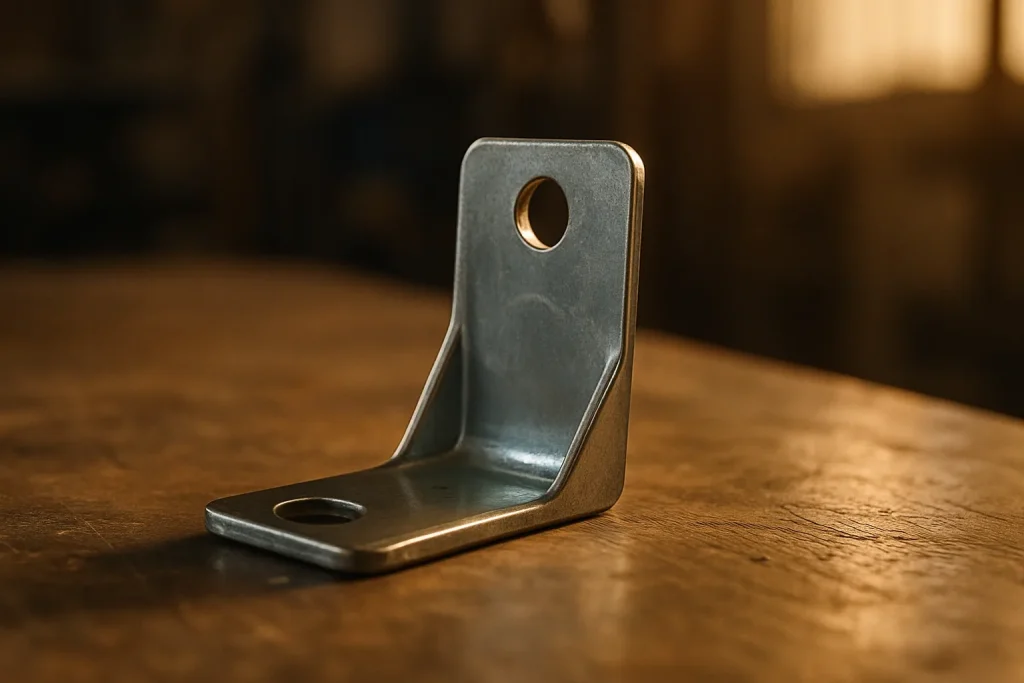
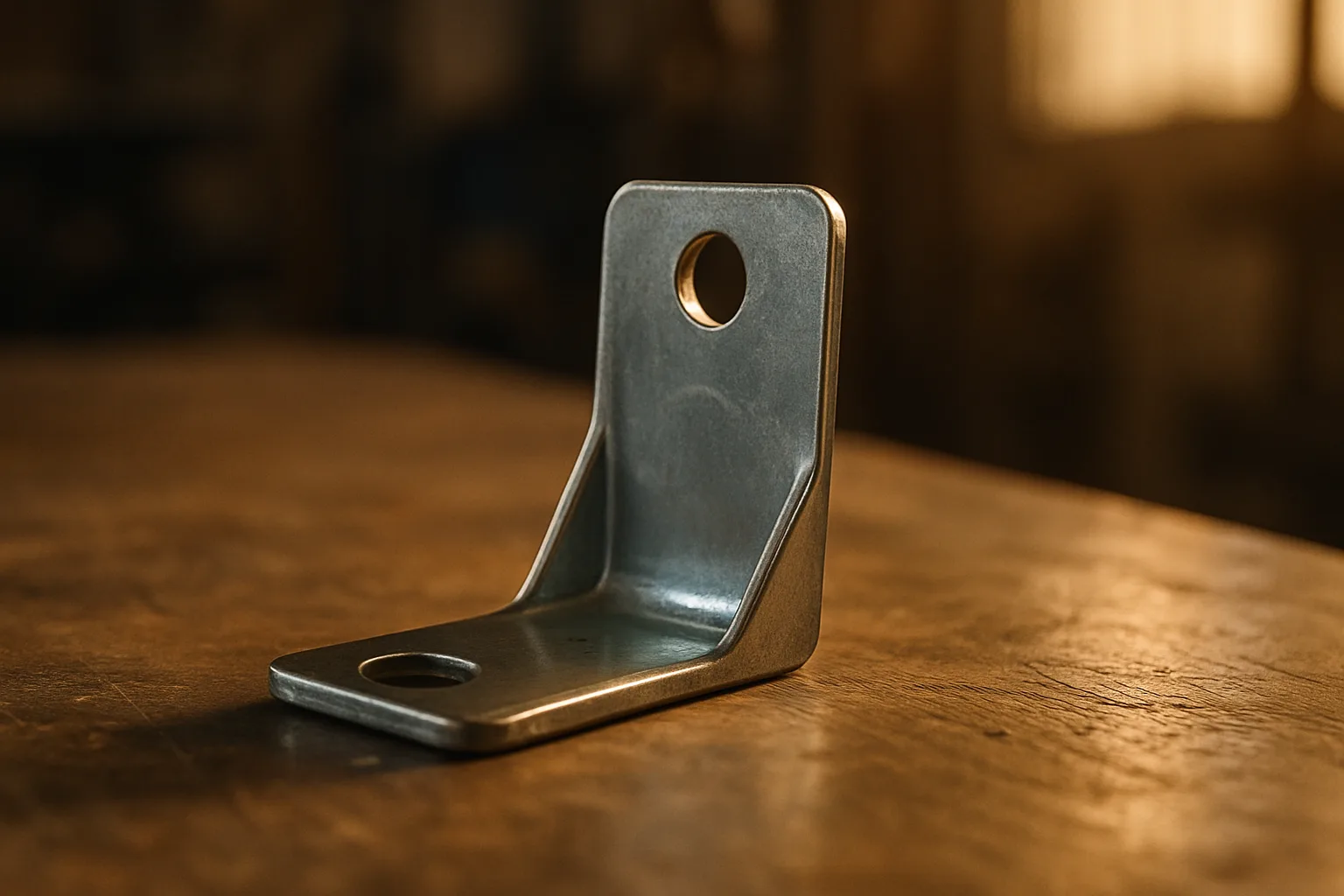
Brackets and supports are frequently the lowest-hanging fruit. They are usually made from mild steel, HSLA, or stainless steel, and they lend themselves to progressive die stamping or robotic welding. Because they are often standardized across a project, tooling investment can be amortized over thousands of units. Localizing these parts eliminates the long ocean freight times and customs clearance delays that can push installation schedules. It also allows the contractor to hold buffer stock locally, responding to site changes without waiting for a shipment from overseas.
Enclosures and housings—whether electrical, instrumentation, or HVAC—are another strong candidate. These parts often combine metal and plastic, requiring both stamping and injection molding. A manufacturing partner with mixed metal-plastic assembly capability can produce the complete unit, reducing the number of suppliers the contractor must manage. In-Kingdom production of enclosures also supports local-content targets because the value-add occurs domestically, not just the final assembly.
Mounting hardware, fasteners, and small formed parts are often overlooked but can represent a significant volume of imported items. While individual part values may be low, the aggregate spend and lead time impact can be substantial. Localizing these items through high-speed stamping or injection molding can simplify procurement and reduce the risk of stockouts. The key is to group them into part families that share material and process characteristics, so tooling and production runs are efficient.
Finally, contractors should consider parts that are critical to the project schedule. If a delayed component can halt installation or commissioning, localizing it provides a direct schedule benefit. This is particularly true for parts that are custom-made and have no alternative source. By bringing these parts in-Kingdom, the contractor gains the ability to expedite production, inspect quality firsthand, and manage changes without international logistics delays.
How Do You Structure a Localization Review Before Project Award?
You structure a localization review before project award by forming a cross-functional team—procurement, engineering, and project controls—to screen the bill of materials for localizable families, then engaging an in-Kingdom manufacturing partner for feasibility and cost feedback. This review should happen during the tender phase, not after contract signature, so that the localization plan can be incorporated into the technical and commercial proposal. The output is a prioritized list of component families, a preliminary cost-benefit analysis, and a clear implementation roadmap.
The first step is to extract the bill of materials and tag each item with key attributes: material, process (stamping, molding, assembly), annual quantity, unit weight, and current source. This data allows the team to sort parts into families and identify those with the highest potential for localization. Parts that are already produced in-Kingdom should be excluded, as should those with proprietary designs or single-source constraints that cannot be replicated locally.
Next, the team should assess each candidate family against a set of localization criteria. These include volume thresholds, tooling feasibility, material availability in Saudi Arabia, and the criticality of the part to the project schedule. A simple scoring model can help prioritize: parts with high volume, stable design, and schedule criticality score highest. The team should also consider the total cost of ownership, including freight, duties, inventory carrying costs, and the risk of delays.
Once the shortlist is defined, the contractor should engage a manufacturing partner like the alrouf factory for industry to validate feasibility. This engagement should include a review of drawings, material specifications, and tolerance requirements. The partner can provide feedback on process selection, tooling lead times, and unit pricing at various volumes. This early collaboration often reveals opportunities to simplify designs for local production, reducing cost and lead time.
The output of the review should be a localization plan that is integrated into the project execution strategy. This plan should specify which families will be localized, the target dates for tooling and first articles, and the expected local-content contribution. It should also include a risk mitigation plan for parts that remain imported. By presenting this plan during the bid, the contractor demonstrates a commitment to Saudi Vision 2030 and local-content targets, which can be a competitive advantage.
What Lead Time and Cost Benefits Come from In-Kingdom Stamping and Molding?
In-Kingdom stamping and injection molding can reduce component lead times from 12–16 weeks for imported parts to 3–6 weeks for locally produced parts, while also lowering total landed cost by eliminating ocean freight, customs duties, and large safety stocks. These benefits are most pronounced for high-volume, repeatable parts where tooling can be amortized quickly. For EPC and MEP contractors, shorter lead times translate directly into more predictable project schedules and reduced exposure to global supply chain disruptions.
Import lead times are not just about shipping. They include supplier lead time, production scheduling, inland transport to port, ocean freight, customs clearance, and inland delivery to site. Each step adds variability. A part that is quoted at 12 weeks can easily become 16 weeks if a vessel is delayed or customs holds a shipment. Local production collapses these steps into a single, controllable process. The contractor can visit the factory, inspect first articles, and adjust delivery schedules as project needs change.
Cost benefits are equally significant. While unit pricing for local production may sometimes be higher than low-cost country imports, the total landed cost often favors local supply. Freight costs for metal and plastic components can be substantial, especially for bulky items like enclosures and supports. Customs duties and clearance fees add another layer. And the cost of carrying safety stock—warehouse space, inventory management, and capital tied up—is eliminated or greatly reduced. When these factors are included, local production frequently delivers a lower total cost, as detailed in this in-Kingdom vs. imported parts cost case.
Moreover, local production reduces the risk of quality issues that are only discovered upon arrival. When parts are produced in-Kingdom, the contractor can implement source inspection, witness first-article inspections, and resolve issues before shipment. This is particularly important for mixed metal-plastic assemblies, where fit and function depend on tight tolerances between components. A local partner can assemble and test the complete unit, ensuring it meets specifications before it leaves the factory.
Finally, local production supports local-content targets, which can be a commercial advantage. Many project owners in Saudi Arabia, including those in the oil and gas, petrochemical, and infrastructure sectors, have local-content requirements tied to IKTVA or Vision 2030. By localizing components, the contractor contributes to these targets and can present a stronger proposal. The alrouf factory for industry is structured to provide the documentation and traceability needed to verify local content, simplifying the contractor’s reporting.
How Can Contractors Qualify an In-Kingdom Manufacturing Partner for Project Components?
Contractors can qualify an in-Kingdom manufacturing partner for project components by assessing technical capability, quality systems, capacity, and project experience—then running a pilot part family before full-scale transfer. The qualification process should be rigorous but streamlined, focusing on the specific processes required for the contractor’s component families. For metal stamping, this means evaluating press tonnage, die maintenance, and material handling. For injection molding, it means reviewing machine tonnage, mold maintenance, and process control. For mixed assemblies, it means verifying robotic welding and assembly capabilities.
The first step is a capability audit. The contractor should visit the factory and review the equipment list, maintenance records, and calibration schedules. They should also examine the quality management system, including inspection procedures, traceability, and corrective action processes. Certifications such as ISO 9001 are a baseline; industry-specific certifications may be required for certain projects. The alrouf factory for industry maintains a quality system designed for OEM and project-driven work, with documented procedures for first-article inspection, in-process checks, and final inspection.
Next, the contractor should review the partner’s experience with similar part families. Have they produced brackets, enclosures, or housings for other EPC or MEP projects? Can they provide references or sample parts? This is not about name-dropping; it is about understanding whether the partner has solved the same manufacturing challenges before. A partner who has experience with HSLA stamping or glass-filled nylon molding will be better prepared to handle the contractor’s specific requirements.
Capacity is another critical factor. The contractor should understand the partner’s available press time, molding machine time, and assembly capacity. They should also discuss how the partner handles peak demand and whether they have contingency plans for equipment breakdowns. A partner with multiple machines and cross-trained operators is more resilient. The alrouf factory for industry plans capacity to accommodate project-driven surges, with scheduling flexibility built into the production process.
Finally, the contractor should run a pilot. This involves transferring one or two part families to the local partner, producing first articles, and validating them against the original specifications. The pilot should include a full production run to assess repeatability and process capability. If the pilot is successful, the contractor can expand to additional families. This phased approach reduces risk and builds confidence in the local supply base.
What Role Does Local Content Play in EPC and MEP Project Awards in Saudi Arabia?
Local content plays a decisive role in EPC and MEP project awards in Saudi Arabia, as project owners increasingly tie bid evaluation to IKTVA scores and Vision 2030 localization targets. Contractors who can demonstrate a higher percentage of in-Kingdom manufactured components are often favored, even when their initial price is slightly higher. This is because local content is not just a procurement metric; it is a strategic priority for the Kingdom, aimed at diversifying the economy and building domestic industrial capability.
For Tier B contractors, local content is both a challenge and an opportunity. The challenge is that many components in a typical project are imported, either because they are specialized or because the contractor has existing supply chains. The opportunity is that by localizing suitable families, the contractor can improve their local-content score without compromising quality or schedule. In fact, local production often improves schedule reliability, which is a key consideration in project awards.
Local content calculations typically consider the value of goods and services produced in-Kingdom, as well as the percentage of local workforce and investment. For manufactured components, the key is that the manufacturing process—stamping, molding, assembly—occurs in Saudi Arabia. The alrouf factory for industry provides documentation that traces the origin of materials and the location of processing, which contractors can use to substantiate their local-content claims. This documentation is essential for audits and for demonstrating compliance with project requirements.
Beyond the score, local content can be a differentiator in competitive bids. When two contractors have similar technical and commercial proposals, the one with a stronger localization plan may win. This is particularly true for projects that are explicitly tied to Vision 2030 or IKTVA. By integrating localization into their bid strategy, contractors can position themselves as partners in the Kingdom’s industrial transformation, not just suppliers of construction services.
Finally, local content is not a one-time effort. It is a capability that contractors can build over time. By starting with a few part families and expanding, contractors can develop a reliable in-Kingdom supply base that serves multiple projects. This reduces risk, improves margins, and strengthens their competitive position. The alrouf factory for industry is structured to support this long-term partnership, with scalable capacity and a focus on repeatable quality.
What Are the Practical Steps to Transfer a Component Family to Local Production?
The practical steps to transfer a component family to local production are: select the family, gather technical data, engage a manufacturing partner, develop tooling, run first-article inspection, and ramp up production. Each step should be managed with clear milestones and responsibilities. For EPC and MEP contractors, the transfer process should be integrated into the project schedule, with buffer time for tooling and validation. The goal is to achieve a seamless transition from imported to local supply without disrupting installation.
The first step is to select the family. This should be based on the localization review, with priority given to high-volume, stable parts. The contractor should assemble a complete technical data package, including drawings, 3D models, material specifications, and quality requirements. If the original drawings are not available, the contractor may need to reverse-engineer the part or obtain them from the original supplier. This data package is the foundation for the localization effort.
Next, the contractor should engage a manufacturing partner and initiate a feasibility review. The partner will assess the drawings, recommend a process (stamping, molding, or assembly), and provide a quotation for tooling and unit pricing. This is also the time to discuss design for manufacturability (DFM) improvements that can reduce cost or improve quality. The alrouf factory for industry uses this phase to align on specifications and identify any potential issues before tooling is cut.
Once the quotation is accepted, the partner will design and build the tooling. This can take several weeks, depending on complexity. The contractor should review and approve tooling designs before fabrication begins. After tooling is complete, the partner will produce first articles and submit them for inspection. The contractor should perform a thorough first-article inspection, comparing dimensions, material, and finish against the original specifications. Any deviations should be addressed before full production.
After first-article approval, the partner will ramp up production. The contractor should monitor the initial production runs to ensure repeatability and quality. It is also important to establish a delivery schedule that aligns with project needs. The alrouf factory for industry provides production documentation, including inspection reports and material certificates, to support the contractor’s quality records. Once the family is in stable production, the contractor can consider transferring additional families, building on the success of the first transfer.
◈ Key Takeaways
- ✦Start localization during the tender phase: screen your bill of materials for high-volume, stable part families like brackets, enclosures, and supports before award to gain leverage and present a stronger proposal.
- ✦Prioritize families by volume, design stability, and schedule criticality: localize the parts that are most likely to cause delays if imported, and group them by material and process for efficient tooling.
- ✦Engage an in-Kingdom manufacturing partner early for feasibility and DFM feedback: a partner like the alrouf factory for industry can validate process selection, tooling lead times, and unit pricing before you commit.
- ✦Quantify total landed cost, not just unit price: include freight, duties, inventory carrying costs, and schedule risk when comparing local versus imported components—local production often wins on total cost.
- ✦Run a pilot part family before full-scale transfer: validate quality and repeatability with a first-article inspection and a full production run, then expand to additional families as confidence grows.
Frequently Asked Questions
❓ What is the difference between an industry and a factory?
An industry refers to a broad sector of economic activity, such as manufacturing or construction, while a factory is a specific physical facility where goods are produced. In Saudi Arabia, localizing components for EPC and MEP projects often involves partnering with a factory for industry like ALROUF, which specializes in manufacturing products that meet the demands of large-scale infrastructure projects.
❓ Why is localizing components important for EPC and MEP projects in Saudi Arabia?
Localizing components reduces reliance on imports, shortens lead times, and ensures compliance with Saudi Building Code and Vision 2030 goals. Working with a local factory for industry such as ALROUF helps EPC and MEP contractors achieve cost efficiency and timely project delivery across the Kingdom.
❓ How does a local factory for industry support EPC and MEP projects in KSA?
A local factory for industry provides customized manufacturing, faster logistics, and on-site technical support for EPC and MEP projects. In Saudi Arabia, ALROUF factory for industry offers localized production of components like cable trays, busbars, and prefabricated modules, ensuring adherence to project specifications and Saudi standards.
❓ What types of components can be localized for EPC and MEP projects in Saudi Arabia?
Components such as cable management systems, HVAC ducting, electrical panels, and structural steel can be localized. ALROUF factory for industry specializes in manufacturing these components in Saudi Arabia, helping EPC and MEP contractors meet localization requirements and reduce import dependency.
❓ How does localizing components benefit Vision 2030 in Saudi Arabia?
Localizing components boosts the Saudi economy by creating jobs, enhancing industrial capabilities, and increasing non-oil exports. ALROUF factory for industry contributes to Vision 2030 by providing high-quality locally manufactured components for EPC and MEP projects, supporting the Kingdom’s goal of industrial diversification.
Qualifying a Saudi manufacturing partner?
Download ALROUF’s capability statement: processes, press capacity, materials, quality gates and accepted part families.
ALROUF Industrial Solutions
Localizing the parts Saudi industry imports — Saudi Arabia