
How to Ramp Up Local Production of Repeat Metal Components in Saudi Arabia
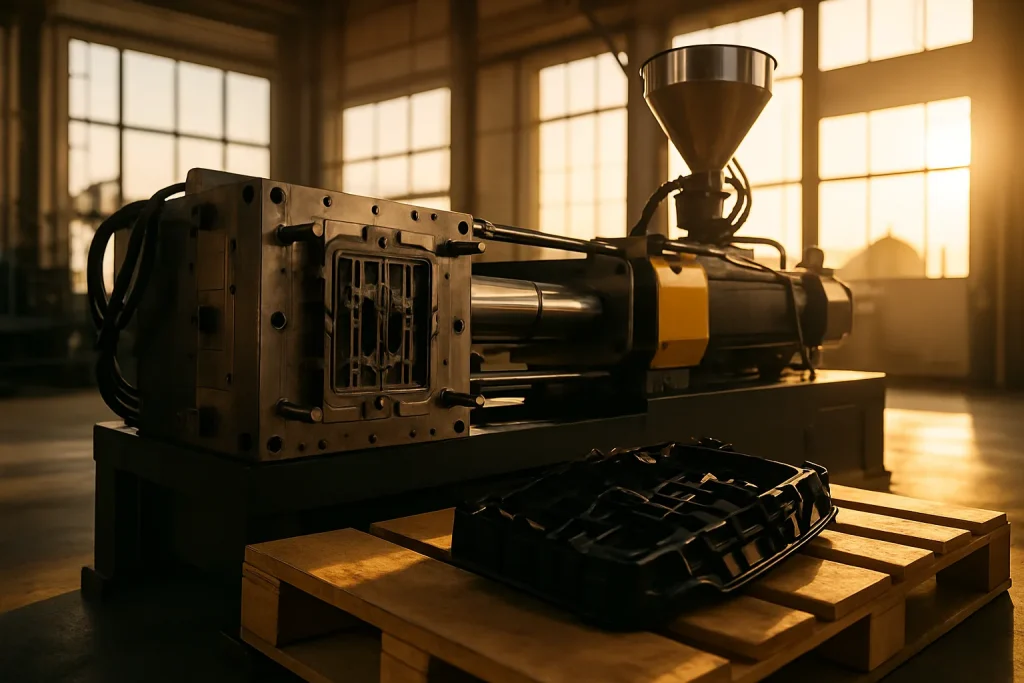
A production ramp-up moves an approved metal component from a reviewed drawing to a controlled pilot and, if the results meet the customer’s requirements, repeat supply. For Saudi OEMs, the sequence is to confirm manufacturing fit, agree on tooling and inspection, approve samples, test production under agreed conditions, and increase orders only when quality, capacity, and delivery are demonstrated.
Why Does a Metal Component Need a Ramp-Up Plan?
A metal component can pass an initial sample inspection and still present difficulties in repeat production. Tool wear, material variation, setup changes, finishing, packaging, and inspection time can all affect the outcome when quantities increase.
A ramp-up plan gives the OEM and manufacturer clear decisions at each stage. It identifies what evidence the customer needs before approving the next quantity and what happens if a part fails inspection. It also helps the manufacturer assess the proposed program alongside its existing production commitments.
The plan should be specific to the component. A simple mounting plate and a formed cover may need different tooling, checks, and production trials. Neither should inherit a fixed timeline or target volume from an unrelated project.
Step 1: Confirm That the Part Fits the Manufacturing Route
Begin with a current drawing or a clear part description. The initial review should cover the component’s material, thickness, geometry, critical dimensions, expected annual demand, and intended use. The OEM should identify features that affect assembly or safety so they receive appropriate attention during technical review.
The manufacturer then assesses whether an available process could make the part and what information is still missing. For a potential stamped or formed component, this includes considering the proposed tooling route, material supply, secondary operations, inspection needs, and likely batch sizes.
There are three useful outcomes:
- Potential fit: The part can move to detailed technical and commercial review.
- More information needed: The team requests missing specifications, samples, demand information, or clarification of the part’s function.
- No current fit: The available route or program economics do not support the requirement.
“Potential fit” is an invitation to continue the review. It is not approval to produce the part or a promise of price and delivery.
Step 2: Agree on Tooling, Costs, and Responsibilities
Tooling can have a major effect on the feasibility of repeat metal production. Before planning a pilot, establish whether the OEM has an existing tool, whether it can be used on the proposed production route, or whether a new tool or fixture may be required.
The OEM and manufacturer should document:
- Who owns the drawing and any existing tool
- Who will arrange new tooling or modifications
- How tooling and setup costs will be quoted
- Who approves tool changes and drawing revisions
- How maintenance and replacement parts will be handled
- What happens to customer-owned tooling at the end of the program
A sample part alone may not answer these questions. The parties also need an agreed drawing revision, material specification, and acceptance criteria. Tooling and setup costs should be identifiable separately from the proposed price per part.
Step 3: Define the Sample and Inspection Plan
Before samples are made, the OEM’s engineering and quality teams should agree on how they will judge them. The inspection plan might include critical dimensions, material records, finish, appearance, fit in the final assembly, and any functional checks relevant to the component.
The parties should also agree on the inspection method. If the customer measures a feature differently from the manufacturer, they need a way to reconcile the results before a pass or fail decision. Any proposed change to material, finish, or geometry should go through the customer’s approval process.
The number of samples and any statistical process studies depend on the drawing, the part’s function, and the customer’s requirements. A universal sample count or process capability threshold cannot establish acceptance for every metal component.
Record the results and obtain a documented decision: approved for the next stage, approved with conditions, or requiring correction and another review.
Step 4: Run an Agreed Pilot
An approved sample shows that a part has met the agreed checks at that stage. A pilot examines whether the proposed route works under the production conditions specified for the program.
Before starting, agree on the pilot order, quantity, inspection frequency, acceptance criteria, and responsibilities. The pilot should also test the steps around manufacturing: incoming material checks, setup, part identification, packaging, and delivery arrangements.
If the pilot identifies a problem, record the affected parts, investigate the cause, and agree on corrective action before increasing the order. The next step may be another sample, a revised tool or process, or a repeat pilot. An issue does not automatically make the whole component unsuitable, but it should not be bypassed to meet a ramp-up date.
For buyers planning a broader move from imported to Saudi production, the pilot is one stage within the component transfer process. The customer should continue to manage its current supply arrangements until it has approved the new source for the intended orders.
Step 5: Check Capacity and Agree on the First Repeat Orders
Before accepting a repeat order, the manufacturer must compare the requested quantity and delivery schedule with the time needed for tooling, setup, production, inspection, maintenance, and any subsequent operations. The capacity of a press on paper does not, by itself, establish available production capacity or a delivery date.
For ALROUF Industrial, this review also needs to account for the factory’s existing electrical accessories commitments. A realistic schedule depends on the full workload of the shared factory.
The OEM and manufacturer can then agree on the first repeat orders and the conditions for any increase. Useful questions include:
- Did pilot parts meet the approved specification?
- Can the inspection plan be followed at the proposed rate?
- Are material and tooling available for the next orders?
- Can the agreed packaging and delivery process be repeated?
- Who will decide whether an issue requires production to pause?
The answers should be recorded with the order and its agreed schedule. No fixed percentage of the OEM’s demand needs to move to the new source at this stage.
Step 6: Monitor Performance as Orders Increase
Once repeat supply begins, both parties need a clear way to review performance. Measures may include accepted and rejected parts, delivery against the agreed schedule, recurring defects, corrective actions, and the time required to resolve them.
Review the results when deciding whether to raise the order quantity, keep it steady, or pause the increase. Changes to the drawing, material, tool, or production route may also require renewed customer approval.
If the OEM retains an existing supplier, it can allocate orders between approved sources according to its own supply plan. The decision should reflect actual quality, capacity, cost, and delivery performance rather than an assumed advantage for either source.
What Information Should an OEM Send for an Initial Review?
An initial inquiry does not need to contain a complete production plan. A useful starting package includes:
- A drawing, sample, or clear description of the metal component
- The material and known dimensions
- Approximate annual demand and expected batch quantities
- The part’s function and important quality requirements
- The destination and approximate date when parts are needed
- Whether a confidentiality agreement is needed before sharing files
Additional information, including tolerances, finish, inspection requirements, and tooling details, can be reviewed as the inquiry progresses. A customer should use the agreed confidential route for sensitive drawings and samples.
Start with One Component
A local production program becomes easier to evaluate when it begins with one defined, recurring metal component. That gives the customer and manufacturer a basis for reviewing the process, tooling, quality requirements, and production plan before discussing larger quantities.
ALROUF Industrial reviews customer components for manufacturing fit and identifies the information needed for a possible next step. Submitting a part begins that review; it does not guarantee technical acceptance, a quotation, or a delivery date.
Submit a Part for Manufacturing Review →
Frequently Asked Questions
Can a metal component move straight from an approved sample to full production?
Sample approval should be followed by the production checks required for that component and customer. An agreed pilot can test whether the process, inspection, packaging, and delivery arrangements work under the proposed conditions.
Is there a standard quantity for a metal component pilot?
No. The appropriate quantity depends on the part, tooling, inspection requirements, proposed production volume, and the customer’s acceptance plan. The OEM and manufacturer should agree on it before the pilot order.
When should an OEM increase orders with a new manufacturer?
Increase orders after the agreed quality and delivery requirements have been met and the manufacturer has confirmed capacity for the proposed schedule. Each increase should follow the OEM’s purchasing and approval process.
What if ALROUF Industrial cannot manufacture the submitted part?
The technical review may find that the part needs more information or is not suitable for the available route. ALROUF should communicate that outcome and its reason before either party commits to tooling or production.